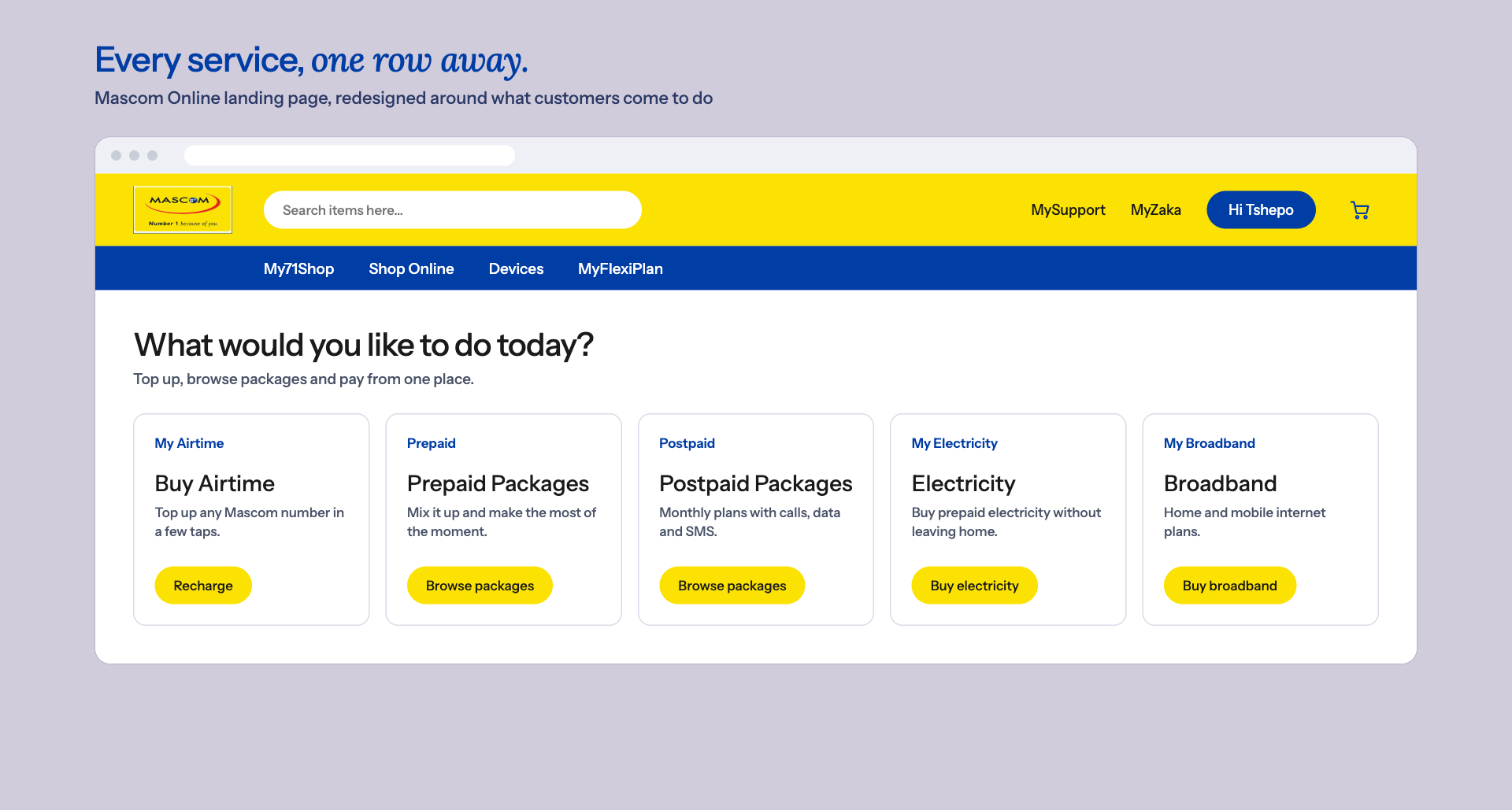

How Do You Simplify 120+ Mobile Service Plans for 1.5 Million Customers?
About Mascom
Mascom is a leading telecommunications provider renowned for its extensive suite of services — telecom, mobile money, internet solutions, ecommerce and marketplace platforms. With a diverse user base across multiple regions, Mascom sought to enhance its digital experiences to improve usability and engagement.
Project overview
A comprehensive UX audit, strategy and prototype programme that turned a sprawling multi-service product suite into journeys users could actually navigate — across borders, languages and cultures.
Key Service
Key Technologies / Platforms
Mascom in Numbers
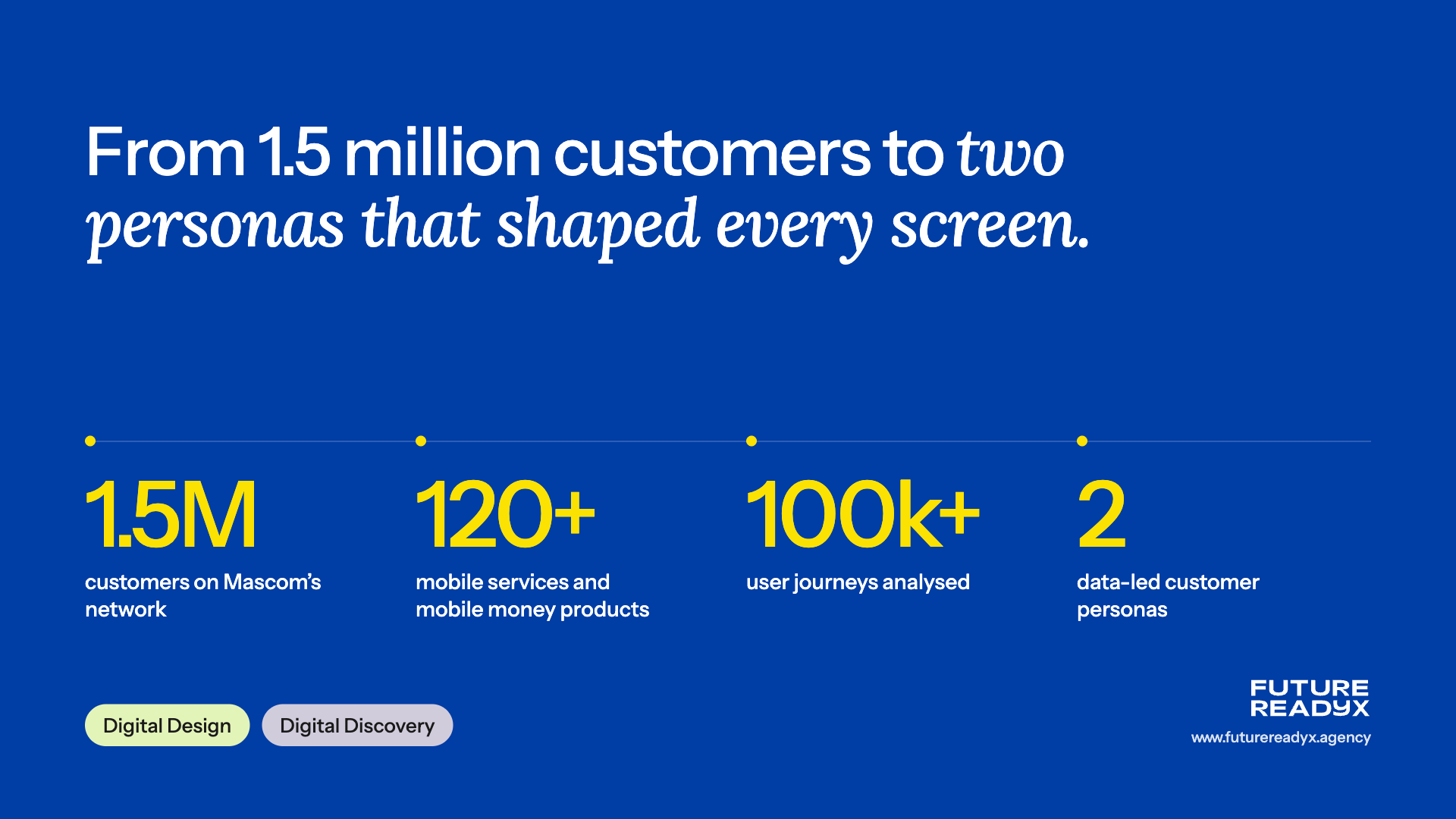
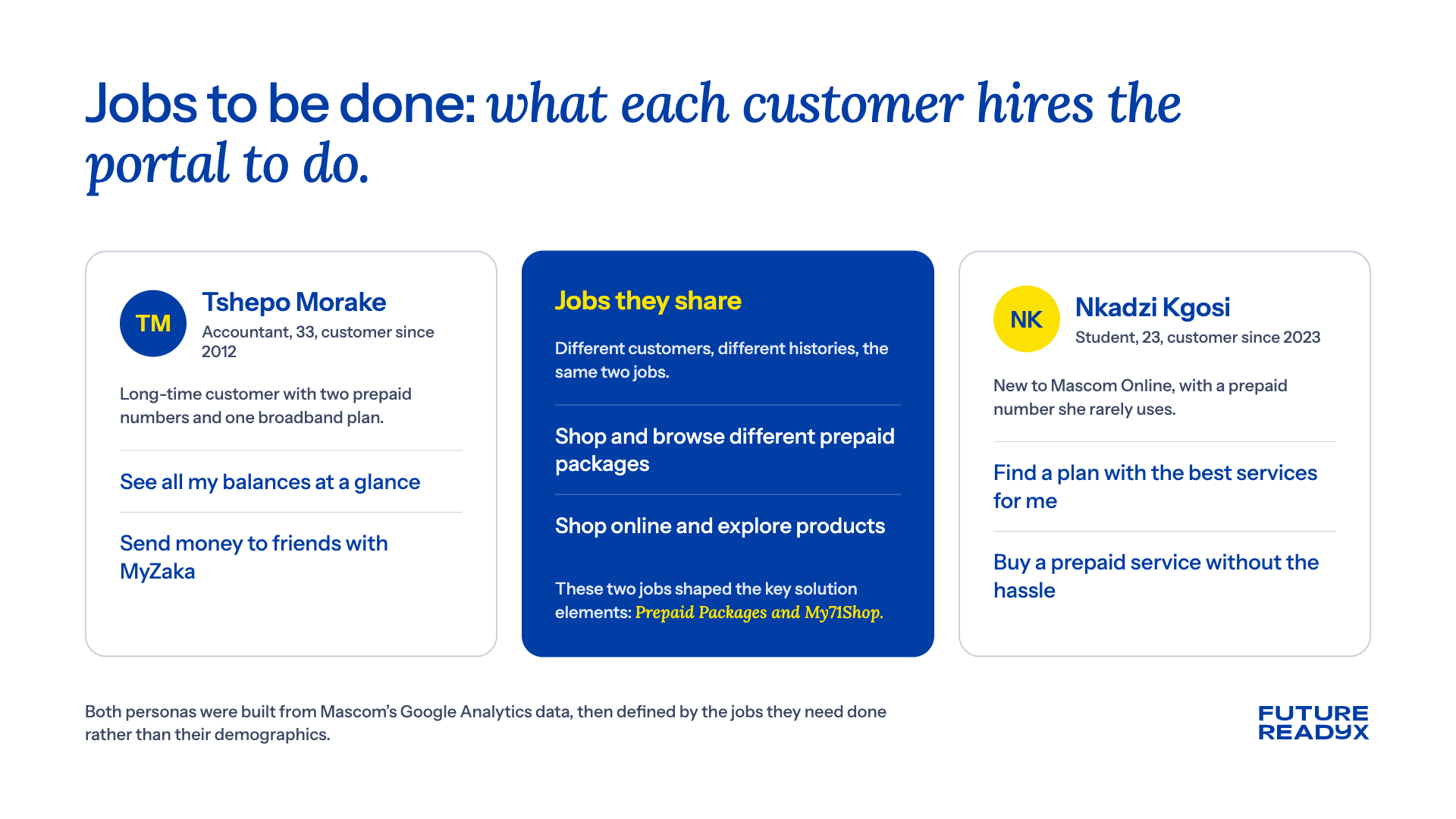
Mascom serves 1.5 million customers across telecoms, broadband, electricity and mobile money. Before designing a single screen, we analysed 100,000+ user journeys and distilled them into two data-led personas to guide every decision.
customers relying on one portal
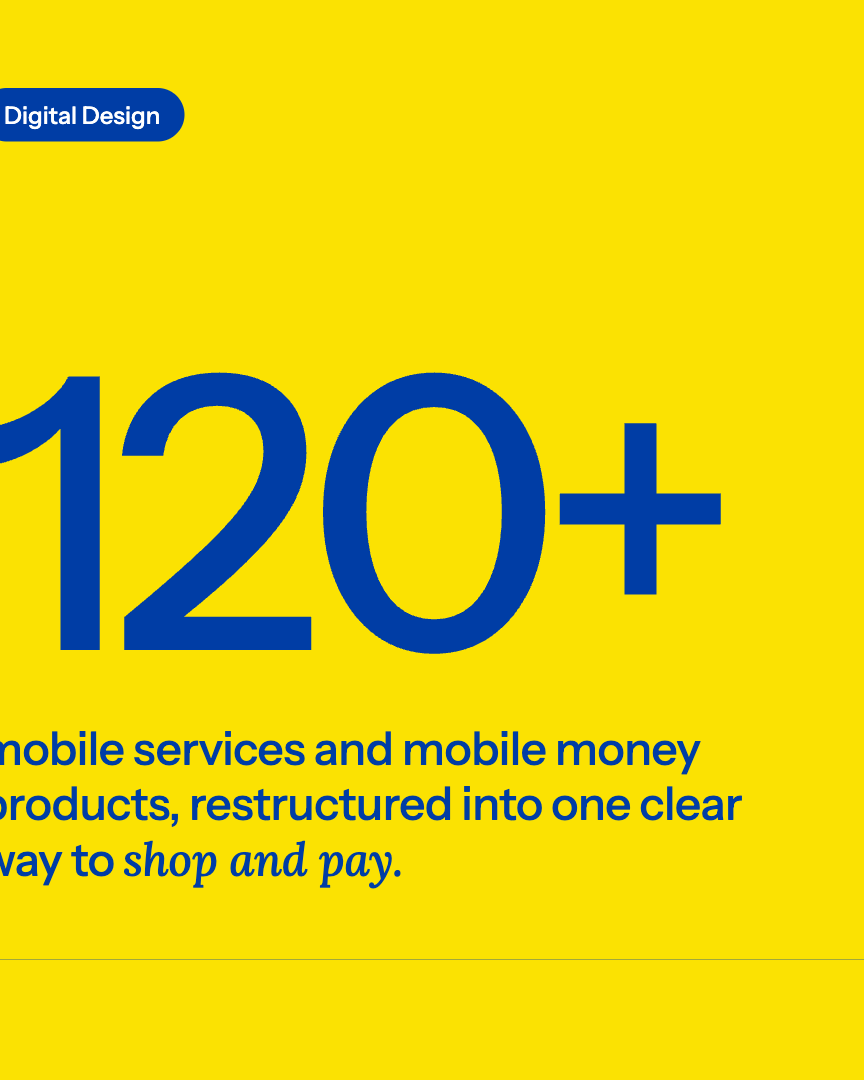
mobile services and mobile money products
user journeys analysed in Google Analytics
data-led customer personas
Their Brief
Mascom approached us needing a thorough UX audit and consultation with two clear objectives: understand how users actually interact with Mascom's platforms and identify the pain points, then streamline those interactions to make the platforms more intuitive.
The Challenge
Mascom's product suite presented three compounding difficulties. Complex user journeys meant customers struggled to navigate a broad range of services. Diverse user needs meant the platforms had to serve a wide demographic with varying cultural and regional preferences. And cross-border, cross-cultural variation made designing a consistent yet locally relevant experience genuinely hard.
Our Approach
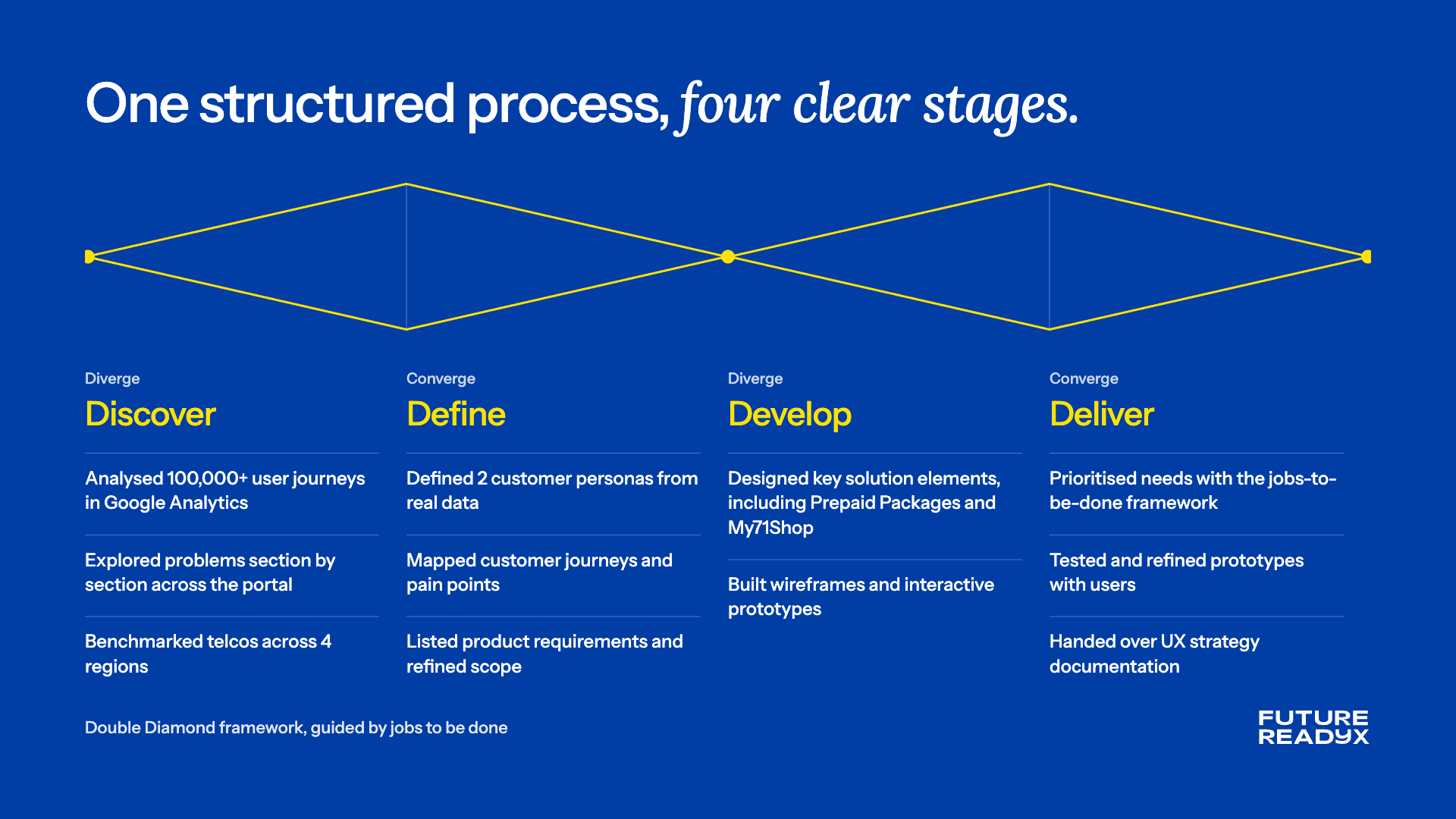
We applied two complementary UX methodologies. The Double Diamond framework guided us through discovery, defining the problems, developing solutions and delivering them — allowing for comprehensive understanding before resolution. The Jobs-to-be-Done framework kept us focused on what users are actually trying to achieve, so the solutions we designed met core needs rather than surface requests.
User Data Analysis and Personas
We began by analysing extensive user data from multiple sources — user feedback, analytics and support tickets — to pinpoint exactly where users faced difficulty. From that we developed detailed personas representing Mascom's diverse user segments, highlighting the different needs and expectations of each group and guiding every subsequent design decision.

Journey Mapping and Demographic Segmentation
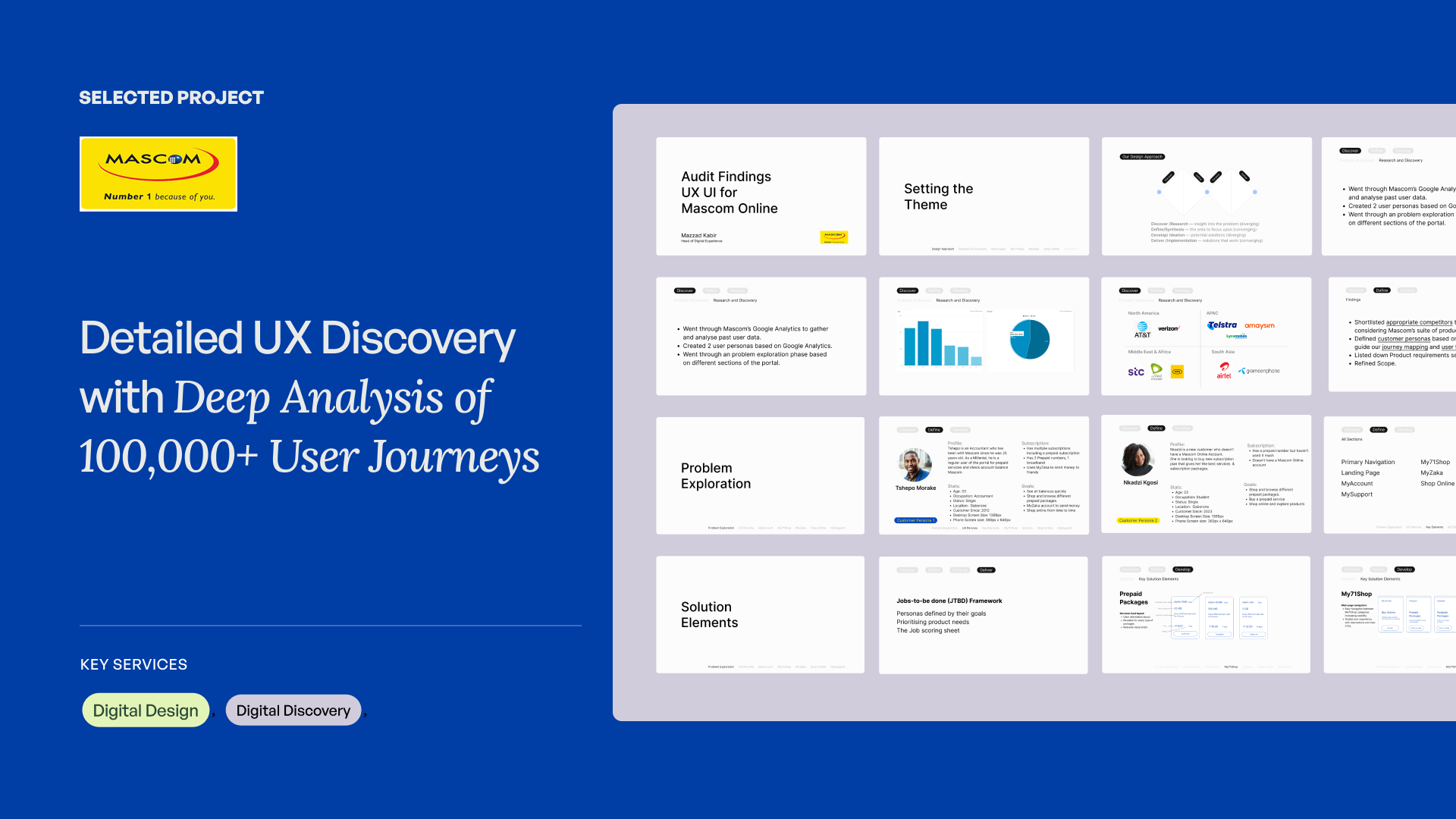
Using existing data, we mapped user journeys and identified key touchpoints, visualising where users experienced friction so we could prioritise areas for enhancement. We then segmented users by demographic factors — age, location and cultural background — ensuring our recommendations were tailored to the specific needs of each group.
UX Analysis, Flows and Prototypes
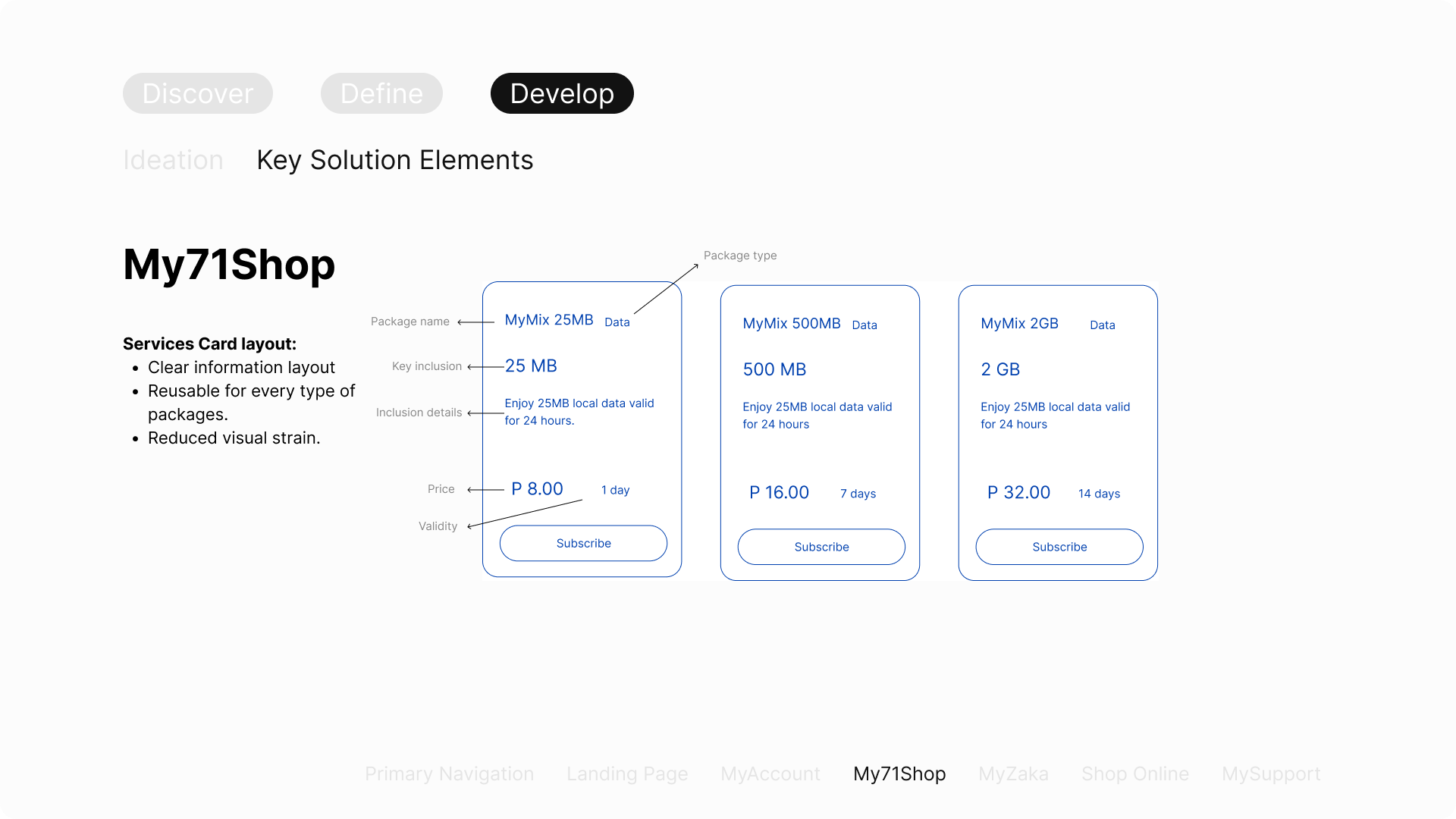
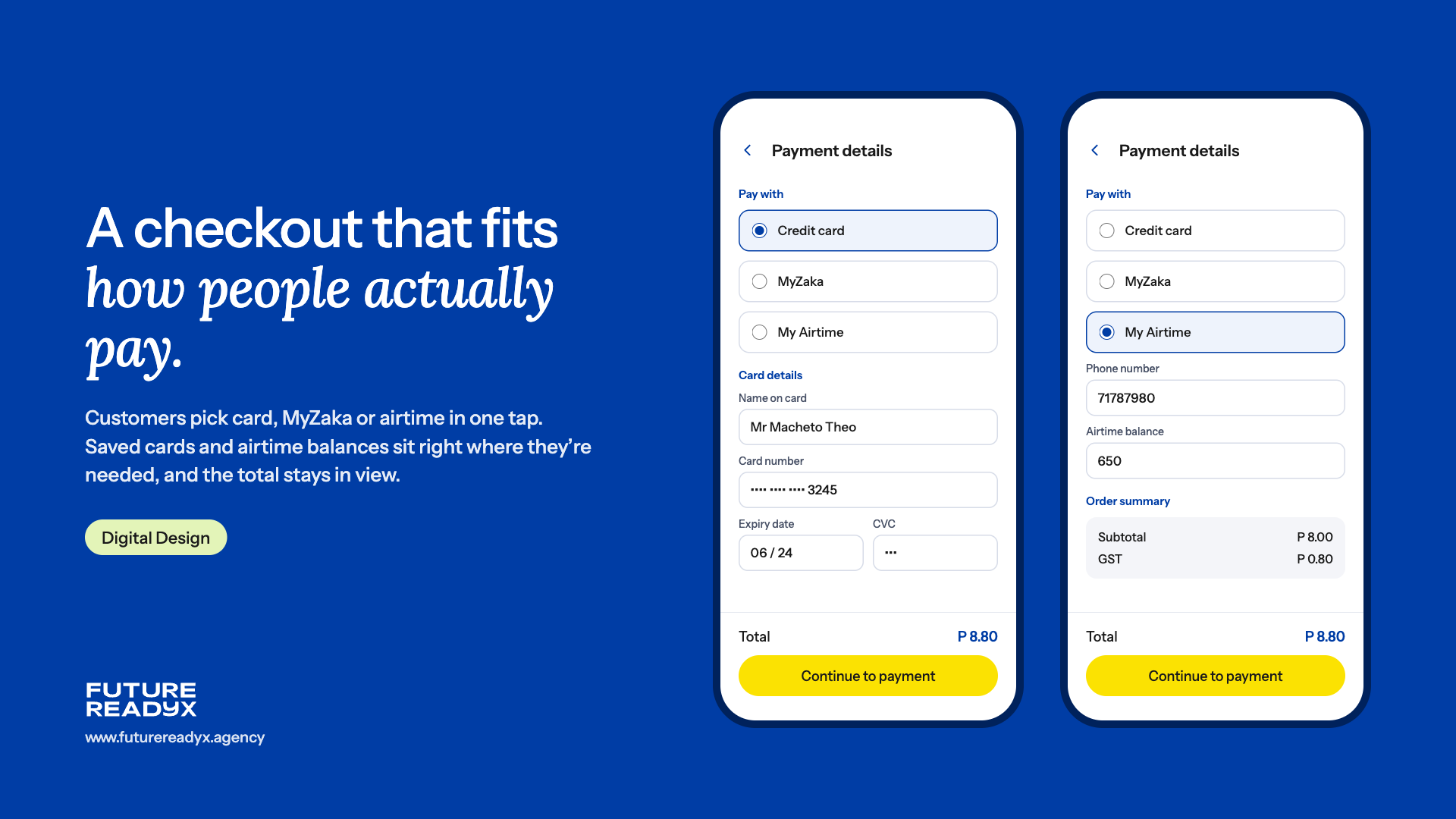
We conducted a detailed UX analysis evaluating user flows, task completion rates and user satisfaction, then optimised the flows for each service — redesigning key paths to simplify navigation and reduce friction. Wireframes and interactive prototypes made the proposed solutions tangible, and each prototype was tested iteratively with users to confirm it solved the problem it was built for.
What We Delivered
A comprehensive UX audit report and strategy outlining user behaviour, pain points and recommended improvements; user personas and journey maps for every key segment; wireframes and interactive prototypes tested and refined against user feedback; and UX strategy documentation giving Mascom the guidelines to implement the recommended improvements on their own terms.